Annual General Meeting 2026

Flexibility & Foresight: Turning Uncertainty into Opportunity

Our Annual General Meeting on April 15 brought together leaders from Swedish industry, government, finance, and international partners for open, forward‑looking dialogue on how to navigate uncertainty and turn it into opportunity. Nearly 200 people registered, and the discussions were focused, candid, and practical.

Our host Electrolux Group  helped us set the stage for a day that encouraged honest exchange and relevant questions. Progress often starts by getting the right people in the same room!

Highlights from the day

Keynotes

Our Keynote speakers enlightend us on interconnected global risks, a shifting trade order, and lessons on resilience and preparedness from Ukraine.

Carolina Klint from Marsh / World Economic Forum and Global Risks Report 

Anders Ahnlid, Director General of the  National Board of Trade gave insights on navigating a shifting global trade order.

Leonid Tymchenko, Deputy Minister for Internal Affairs &  Ambassador Svitlana Zalishchuk delivered powerful insights on how to build resilience and preparedness during ongoing conflict.  

Highlights from the day

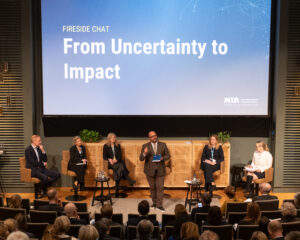
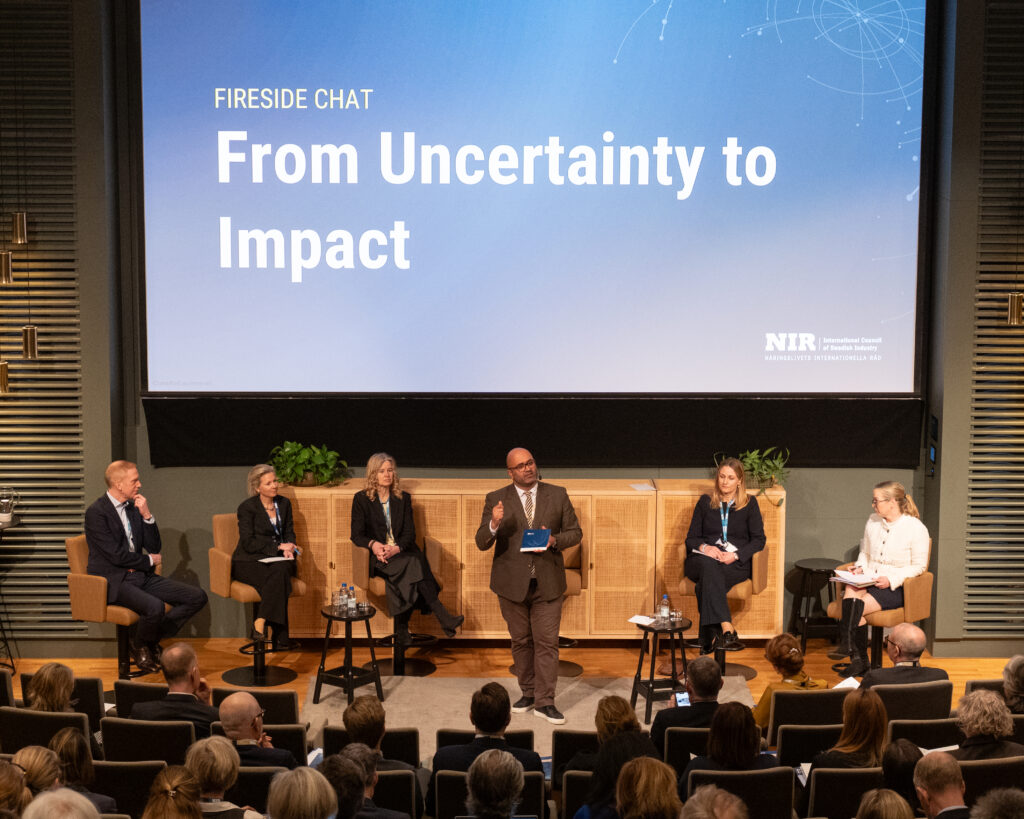
The Fireside chat

Discussed how public and private leadership can translate uncertainty into real-world impact, with reflections on trust, responsibility, and cross‑sector collaboration.

The participants Diana Janse (Ministry for Foreign Affairs), David Johansson (SKF), Sofia Östmark (Sida), Marie Sandin (Tetra Pak) and Tora Leifland (Volvo Construction Equipment) brought reflections on the need for trust, responsibility, and cross‑sector collaboration.

Highlights from the day

Deep-dive sessions

Provided conversations on critical raw materials, human capital in high‑risk markets, risk and finance, how to manage complexity in supply chains.
Critical Raw Materials

with Maria Hugosson (Sandvik), Linn Norrbäck (Boliden), Åsa Palmgren (Sida) 

Human Capital in High‑Risk Markets

– with Djo Moupondo, Johan Reiman (Volvo Group)

From Risk to Reward

with Kristina Jungkarp (Scania), Nazli Konac Edgu Edgu (Citi), Lena Bertilsson (EKN), Pontus Davidsson (SEK) 

Managing Complexity

with Tulika Bansal

Highlights from the day

Key takeaways


  • Flexibility depends on foresight.
  • Collaboration beats fragmentation.
  • Risk is not the problem—unmanaged risk is.
  • Local insight strengthens global strategies.
  • Resilience is built through trust and shared action


Across almost 50 meetings at NIR in 2025, with close to 950 participants and a 93% satisfaction rate, one message is clear: the conversations shaping future business conditions are already happening. We are proud to convene a network where silos give way to shared strategies. In a fragmented world, collaboration is non‑negotiable

More Highlights

EXECUTIVE SUMMARY

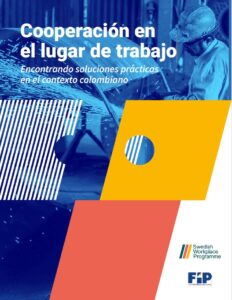
This executive summary presents the findings from the study “Workplace Cooperation: Finding Practical Solutions in the Colombian Context,” conducted by the Fundación Ideas para la Paz (FIP). The study evaluates the added value of the Swedish Workplace Programme (SWP) dialogue and cooperation model within the Colombian labor market.

Throughout 2022, FIP dedicated efforts to thoroughly understand the SWP model, including its concept, foundations, implementation process, and contributions to the labor market. In 2023, FIP documented the experiences of three companies—SKF Latin Trade, Securitas, and Epiroc—that implemented the SWP model in practice. The study also included face-to-face workshops to gather feedback from various stakeholders including civil society, businesses, government, academia, and international cooperation. The findings suggest that the SWP model has the potential to strengthen labor relations, contribute to decent work, and resolve workplace conflicts in Colombia.

The case studies highlight the importance of collaboration between employers and workers to promote decent work and sustainable development in Colombia. They demonstrate that social dialogue facilitates worker participation in labor decision-making, enhances their representativeness, and promotes cooperation between employers and employees, thus improving labor relations and contributing to the well-being of both employees and companies.

The SWP model is particularly noted for improving workplace relationships and commitment to jointly finding solutions to challenges faced by workers and the company. It empowers workers, enhances leadership, and helps integrate business policies into daily practices, reducing the initial disconnect between management objectives and the day-to-day realities of workers. The study also highlights the model’s capacity to manage conflicts constructively, transforming the perception of conflict as an opportunity for improvement. Structured dialogues deepen understanding of the underlying causes of conflicts, fostering empathy and facilitating effective resolution. This promotes a culture of collaboration and a democratic approach to decision-making, building trust.

Additionally, the model is recognized for enabling workers to make decisions, identify challenges, and propose solutions that impact their well-being, and bridging gender gaps in the workplace. Its inclusive approach adapts to the unique needs and characteristics of each company, promoting a stronger and more diverse organizational culture. It also drives good work performance and productivity by involving workers in problem identification and resolution, as well as in implementing improvements and efficiently identifying ESG (Environmental, Social, and Governance) risks for companies.

The document identifies the SWP model’s added value in empowering direct interaction among labor stakeholders in Colombia, overcoming historical or cultural reservations, and contributing to the development of stronger labor relations and improved workplace environments in the country.

Challenges and opportunities of the model are also discussed. The study points out the importance of addressing value chain risks, particularly in a global context where corporate clients demand decent work processes and due diligence. It emphasizes the need to integrate SMEs into this process and use anchor companies as drivers of social dialogue throughout the value chain. The role of the state in social dialogue and the importance of highlighting the benefits of the model for adoption across various business sectors are discussed.

The opportunities of the model include raising awareness of human rights in the workplace in line with the United Nations Guiding Principles (UNGP), to strengthen due diligence, manage risks, promote long-term sustainability, and improve organizational culture. The document also underscores the importance of involving workers in change processes, leveraging their insights for continuous improvement of processes, and fostering innovation opportunities. Lastly, it suggests replicating the model in value chains to address work environment risks and gender biases, involving suppliers and contractors, and integrating the model into corporate policies to strengthen existing programs and transform organizational culture towards resource efficiency and effective participation of employers and workers.