Impact Project
RESPONSIBLE SMALL-SCALE GOLD MINING IN COLOMBIA
The challenge
Towards a formalised gold mining sector in Colombia
Small-scale gold mining plays a major role in global gold supply and supports millions of livelihoods. Yet much of the sector operates outside formal systems. This means miners often lack access to legal markets, financial services, and environmental and labour protections.
Improving the sustainability and competitiveness of formal small-scale miners creates better working conditions, improves environmental performance, making livelihoods more stable over time.
OUR APPROACH
From fragmented efforts to joint solutions
Collaboration is the key enabler. It improves coordination, builds trust, and reduces risks, and helps align standards. Creating a practical pathway.
We bring actors together to build shared evidence, strengthen skills, and support dialogue.
Our work connects small-scale miners, large-scale mining companies, authorities, academia, and community groups. This helps move from isolated actions to coordinated solutions.
THE CHANGE WE SEEK
A More Responsible and Collaborative Small-Scale Mining Sector
The aim is to improve conditions for small-scale miners by strengthening capacities, leadership, and collaboration.
The process links miners to responsible standards and markets, and supports collaboration between small-scale and large-scale mining. This helps position formalisation as a practical and competitive pathway.
WHAT This Means
- For mining companies: Clearer links between sustainability and operations.
- For public authorities: Better evidence for policy and coordination
- For mining-affected communities: Stronger participation and more stable livelihoods.
Progress Towards Results
Institutionalisation
Consolidating Small-Scale and Large-Scale Mining Partnerships for Territorial Development and Women Miners’ Leadership
Developing Capacity
Strengthening Small-Scale Miners’ Associations for Good Governance and Sustainability
From CRAFT Training to Small-Scale and Large-Scale Mining Collaboration on Accreditation
Building Shared Understanding
Shared evidence informs future action
Engaging stakeholders
A Stronger Network for Collective Action
Project Timeline
September-October 2026 // Promoting Safer and More Inclusive Mining with a Gender Perspective
A series of webinars is being delivered in collaboration with ARM and Women in Mining Colombia on women in mining, gender-responsive occupational health and safety, and other relevant topics, addressing women’s participation and the changes needed to create a safer, more inclusive and equitable mining sector.
July 2026 // Sharing lessons from the CRAFT pilots
In Medellín, small- and large-scale mining companies, government authorities and academia exchanged lessons from the CRAFT pilots implemented by ARM with Aris Mining in Marmato and Segovia. The exchange explored how CRAFT and Towards Sustainable Mining (TSM) can strengthen collaboration, risk management and due diligence for more responsible and competitive gold value chains.
“These exchange spaces drive learning and continuous improvement between small-scale and large-scale mining.”
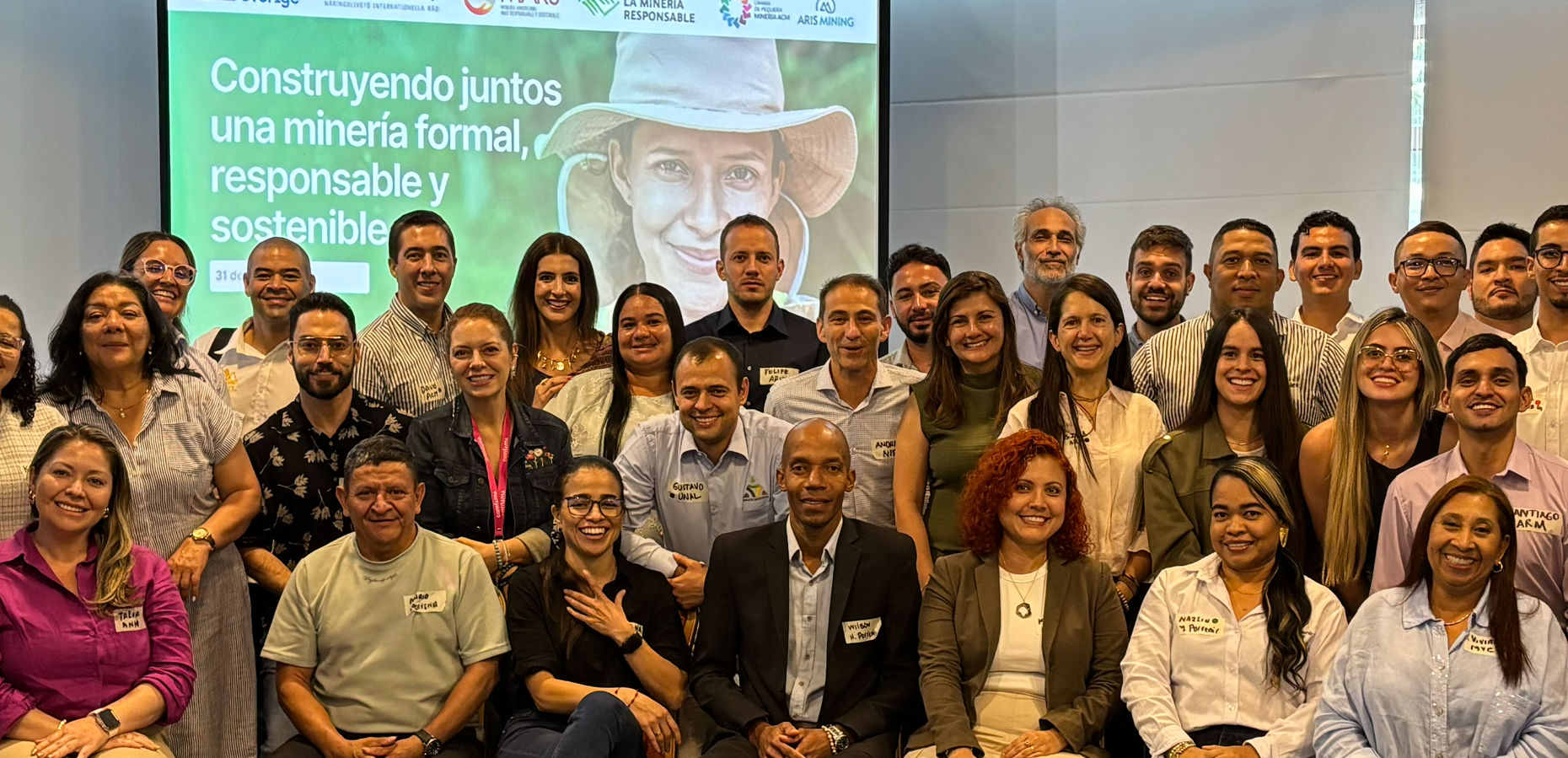
Stakeholders gathered in Medellín, Colombia, 2026.
May–July 2026 // Moving into advanced capacity-building
A second stage has focused on the CRAFT Code, mining sustainability, associative and business capacities, national visibility, and gender-focused mentoring through field diagnostics and in-person and virtual sessions in Marmato (Caldas), and Segovia (Antioquia), where the two active CRAFT pilots are being implemented.
“The work will continue throughout the year to strengthen compliance and establish a replicable model for other territories.”
CRAFT training workshop in Bogotá, Colombia, 2026.
June 2026 // Positioning due diligence as a competitiveness lever
Following two earlier MAPE Talks webinars promoted by the Alliance for Responsible Mining, one led by the Colombian Mining Association on associativity as a driver of innovation, and another led by MARS on due diligence as a key to purposeful and competitive mining, a third webinar organized with Women in Mining Colombia will focus on occupational safety and health from a gender perspective.
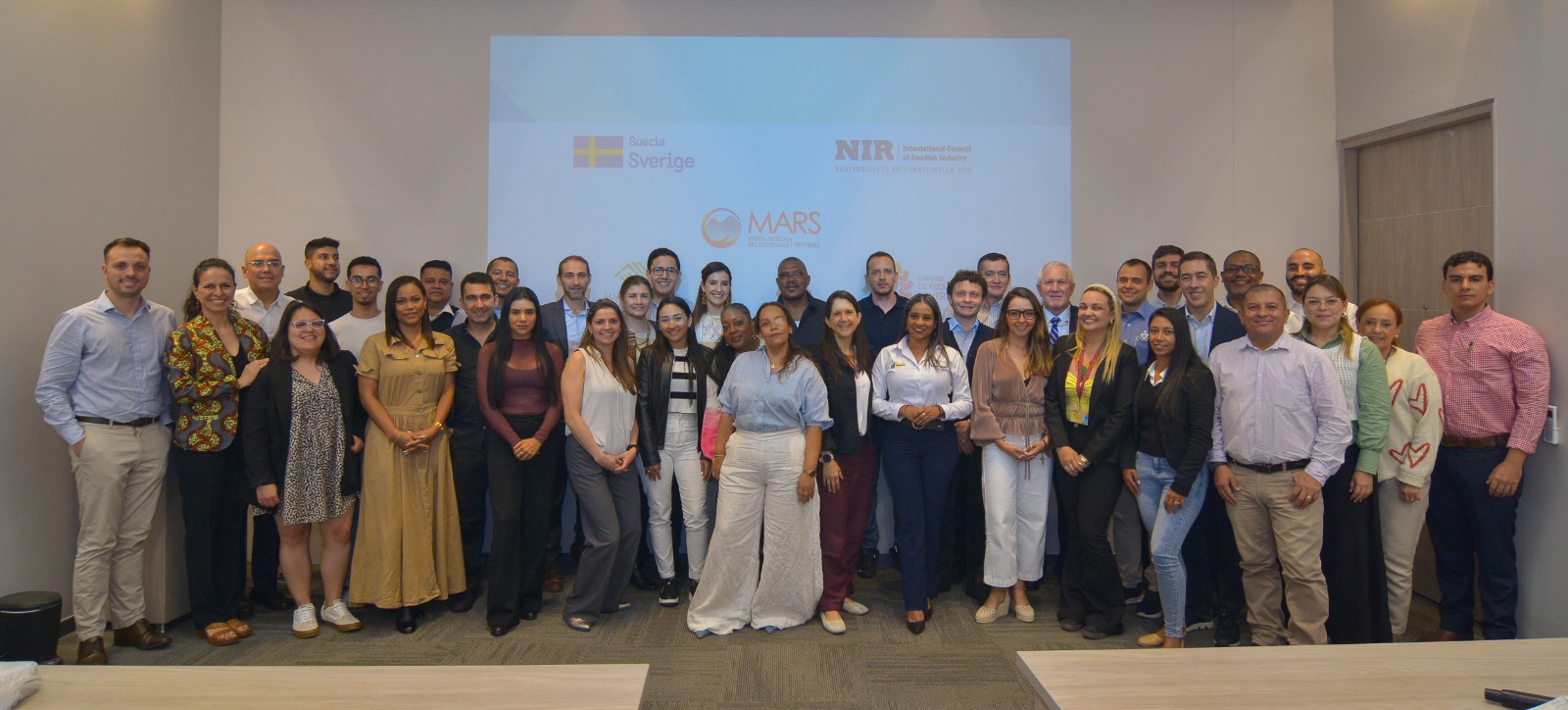
Stakeholder gathering in Medellín, Colombia, 2026.
December 2025 // Exchange at the Buriticá gold mine
A second territorial exchange deepened practical learning on collaboration between small- and large-scale mining actors, reinforcing the need for structured collaboration.
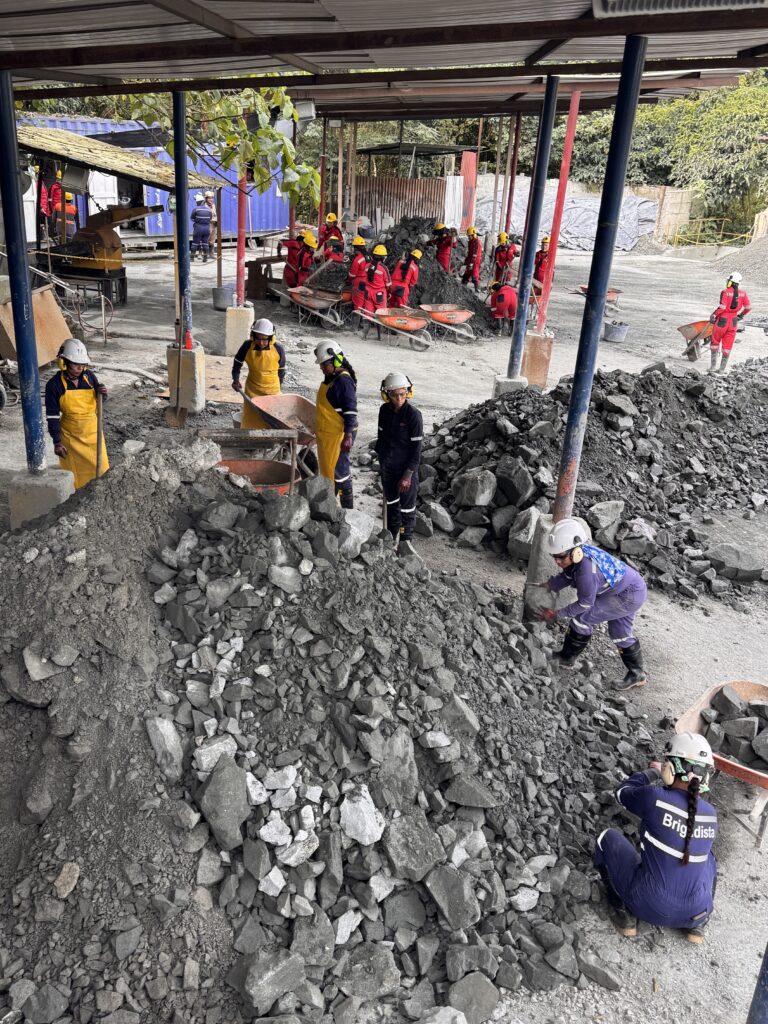
Visit to the Buriticá mine, Antioquia, Colombia, 2025.
November 2025 // Exchange based on the baseline study findings in Medellín
More than 40 representatives from government, companies, women’s organisations, academia, and small-scale mining actors discussed evidence, questions, and next steps for the process.
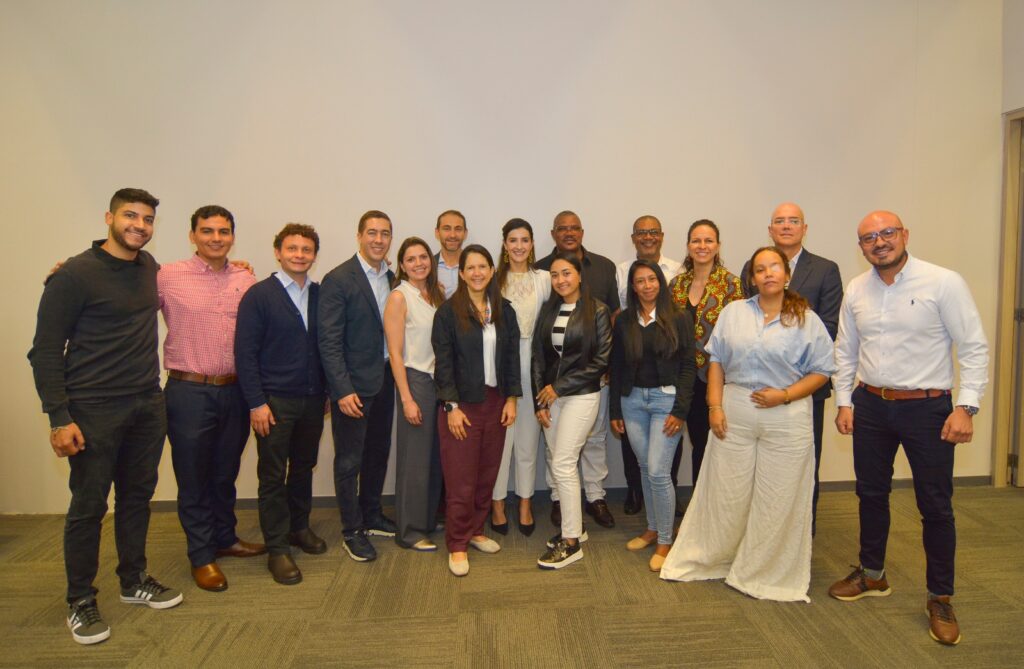
Stakeholder gathering in Medellín, Colombia, 2025.
July 2025 // Field Visit to the Fairmined process in Iquira, Huila, Colombia
This exchange focused on concrete practices in associativity, governance, environmental management, and market access among formal small-scale miners.
“It is necessary to enhance the mining and productive vocation that has always been present by tradition in the communities and
territories.” Representative of a formal small-scale gold mining company.
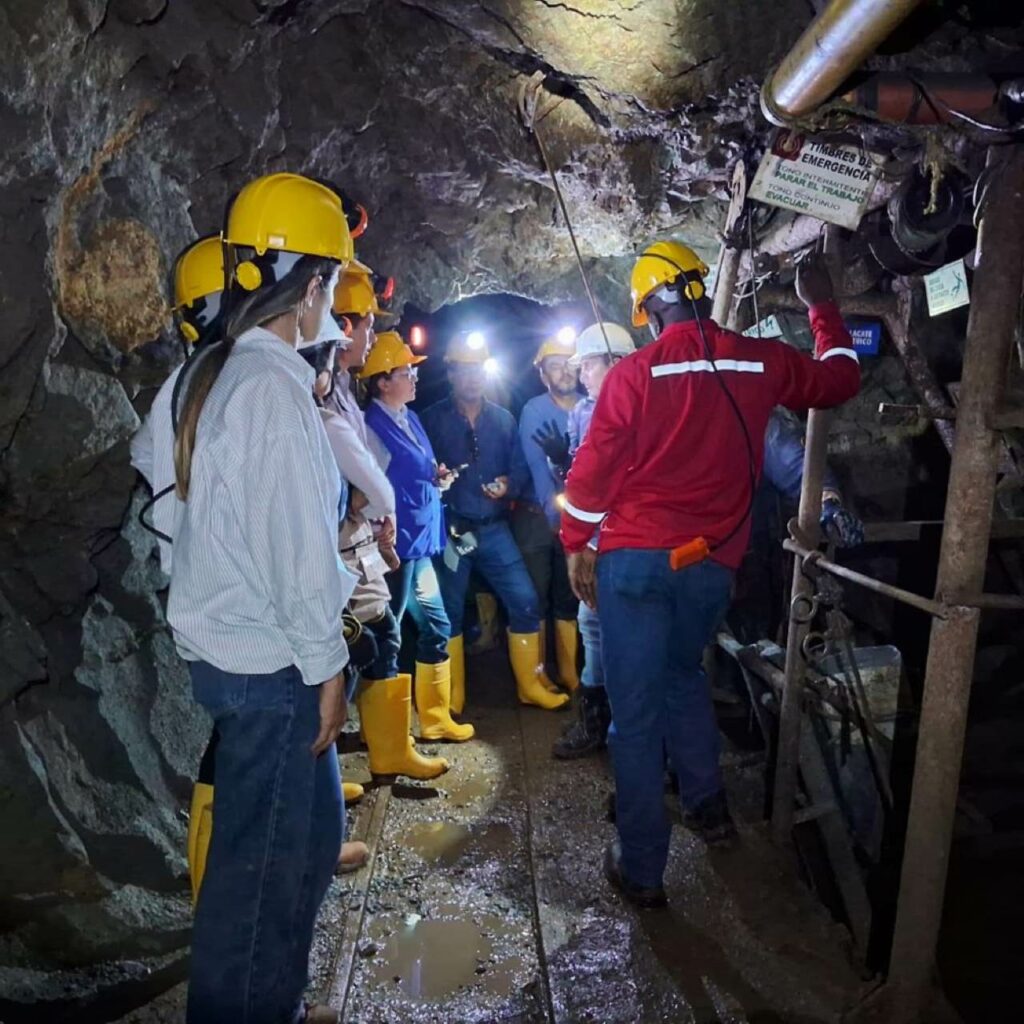
Visit to a mine in Íquira, Huila, Colombia, 2025.
May 2025 // Launch with stakeholders
The launch made the formal small-scale gold mining proposal more visible, connected actors, and prepared the ground for capacity-building activities and later exchanges.
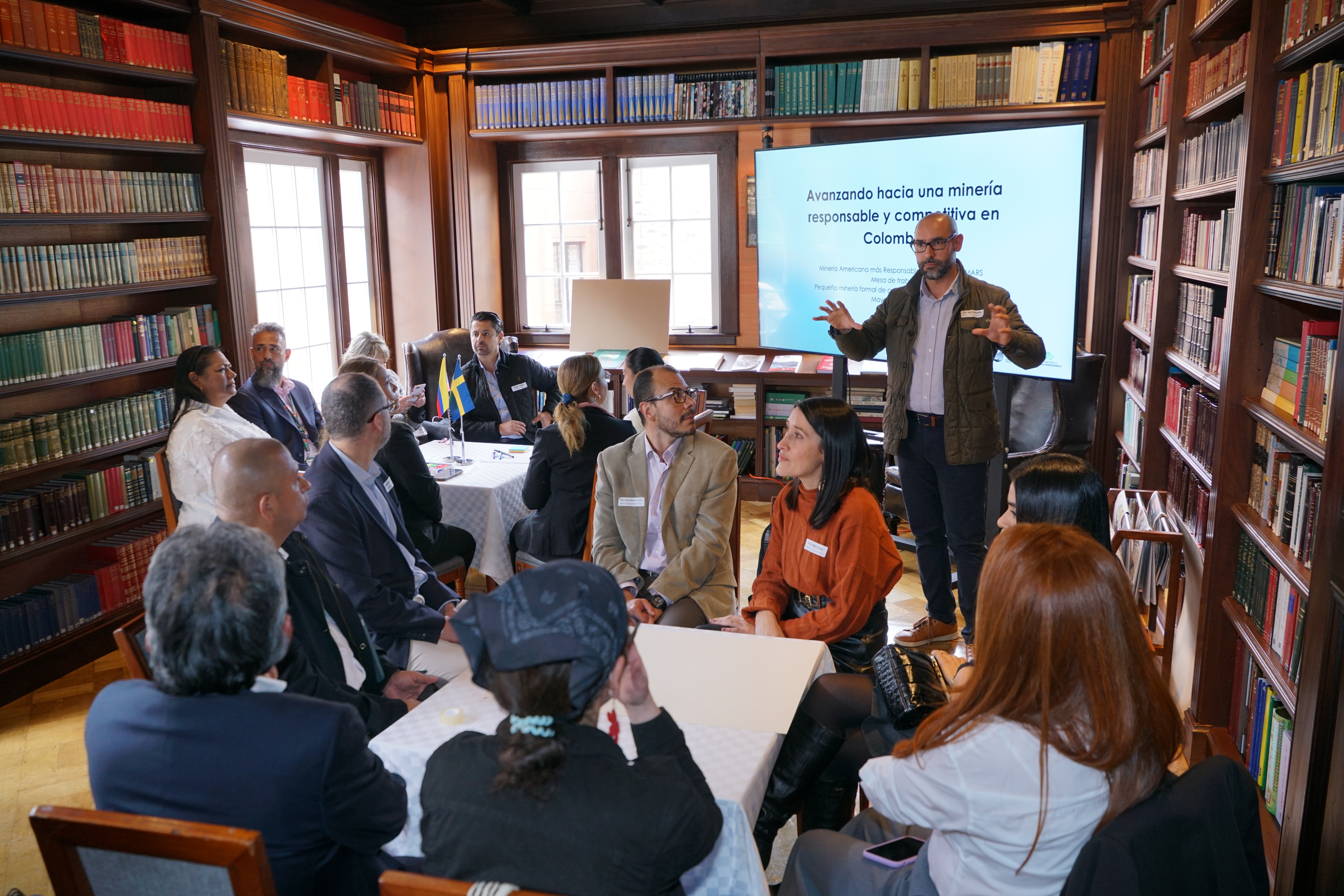
Gathering and starting the conversation in Bogotá. May 2025
2024 // Project initiated
Designed to support more responsible and sustainable formal small-scale gold mining in Colombia. The first stage focused on building interest and a common understanding among key actors on formal small-scale gold mining through a baseline study, partner engagement, introductory training, and evidence-based dialogue.
Implementing partner
The Alliance for Responsible Mining (ARM) is an international non-governmental organization with more than 22 years of experience and a presence in over 40 countries around the world. Headquartered in Medellín, Colombia, ARM works to transform artisanal and small-scale mining (ASM) into a dignified, safe, and environmentally responsible activity that contributes to improving the lives of miners, their families, and their communities.